Artisans · Ceramics
Bitossi
Montelupo Fiorentino, Tuscany, ItalySince 1921
Tuscan ceramics, Aldo Londi and the electric blue of Rimini Blu.
A short history
Montelupo Fiorentino, just west of Florence, has been a pottery town for centuries, and the Bitossi family had been making ceramics there for generations when Guido Bitossi founded his own workshop in 1921.
The modern Bitossi took shape after World War II. Guido's sons brought in Aldo Londi, a Montelupo ceramist who had apprenticed since childhood, as artistic director in 1946. He led the studio for more than fifty years and gave it the bold glazes, stamped patterns and playful animal figures that collectors now hunt for.
In the mid-1950s Londi also brought the architect Ettore Sottsass to Bitossi, starting one of the best-known collaborations in Italian design. Bitossi Ceramiche is still family-run in Montelupo, keeps a company archive museum, and continues to work with outside designers alongside its historic lines.
The lines we see most
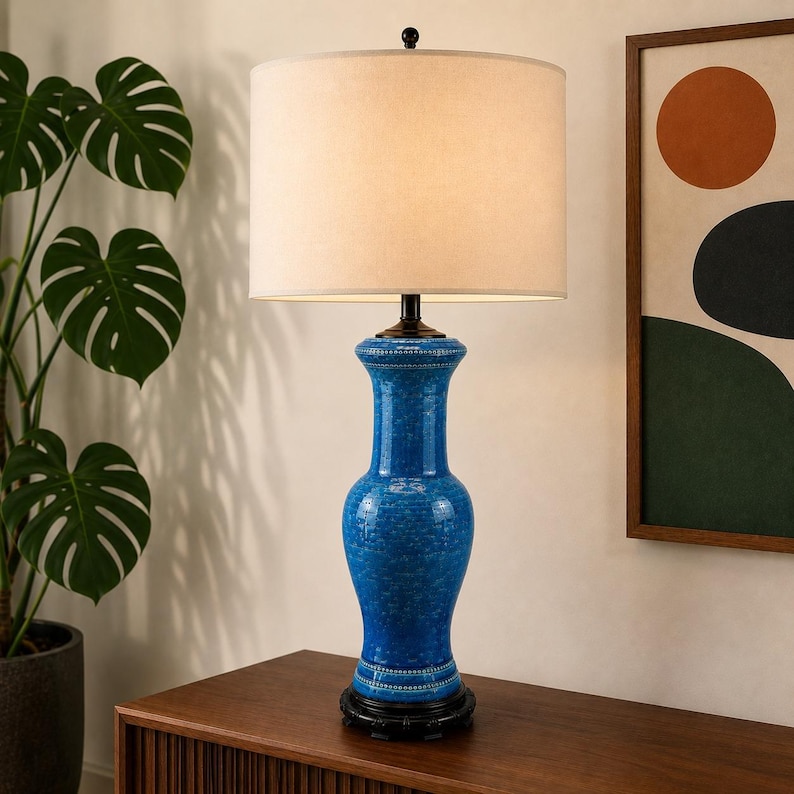
- Rimini Blu — Londi's signature: deep electric blue over pressed and incised geometric patterns, produced from the mid-1950s. Vases, bottles, ashtrays and lamps. Also found in green and red variants.
- Seta and sgraffito — patterns scratched through the glaze to the clay beneath, often with gold or turquoise.
- Soraya and Thai Silk — two more Londi glaze lines in blues and greens that turn up often in our finds.
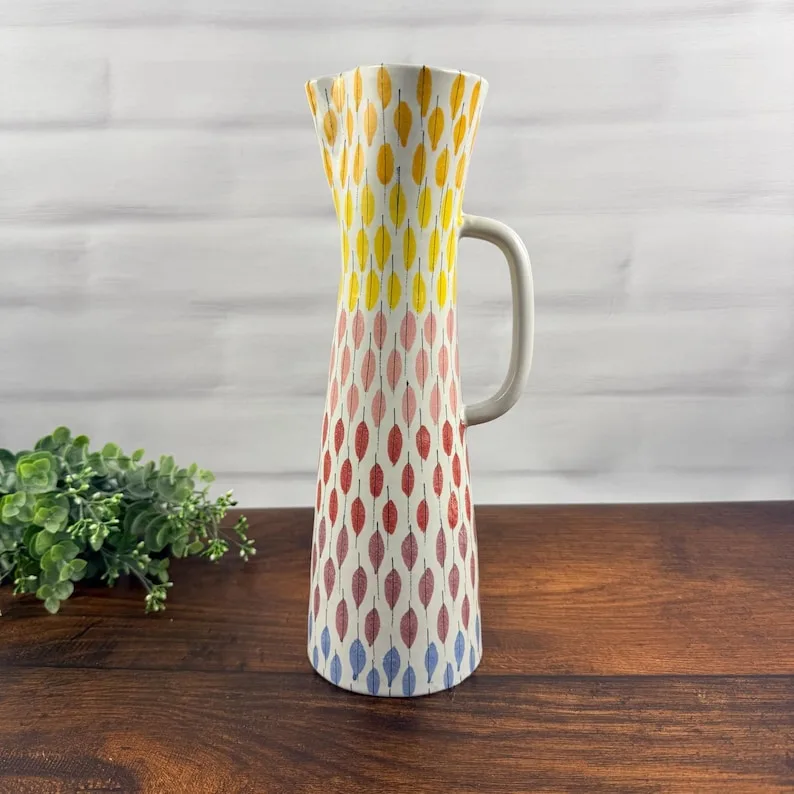
- Liberty and Piume — the yellow birds and feather-pattern pieces in bright multicolor glazes.
- Flavia animals — Londi's lions, cats and other animals, sometimes left unglazed to show the stamped clay.
Identifying Bitossi
- Marks. Many pieces are marked only "Italy" by hand, often with a model or shape number. Some have no mark at all.
- Importer labels. In the U.S., Bitossi was sold through importers including Raymor and Rosenthal Netter, and their paper labels are a strong clue when they survive.
- Clay and glaze. Look for a reddish-buff earthenware body at the foot, thick glossy glaze, and pattern work that was stamped or carved by hand rather than printed.
- Reproductions. Rimini Blu is still produced, so we note whether a piece is vintage or a later production run when we can tell.
Further reading
- Bitossi Ceramiche — the official site and archive museum
- Bitossi on Pamono — a short company history with Aldo Londi and Rimini Blu
In our shop now
Bitossi at Comac Collection
Rimini Blu Table Lamp
Aldo Londi · Mid-century
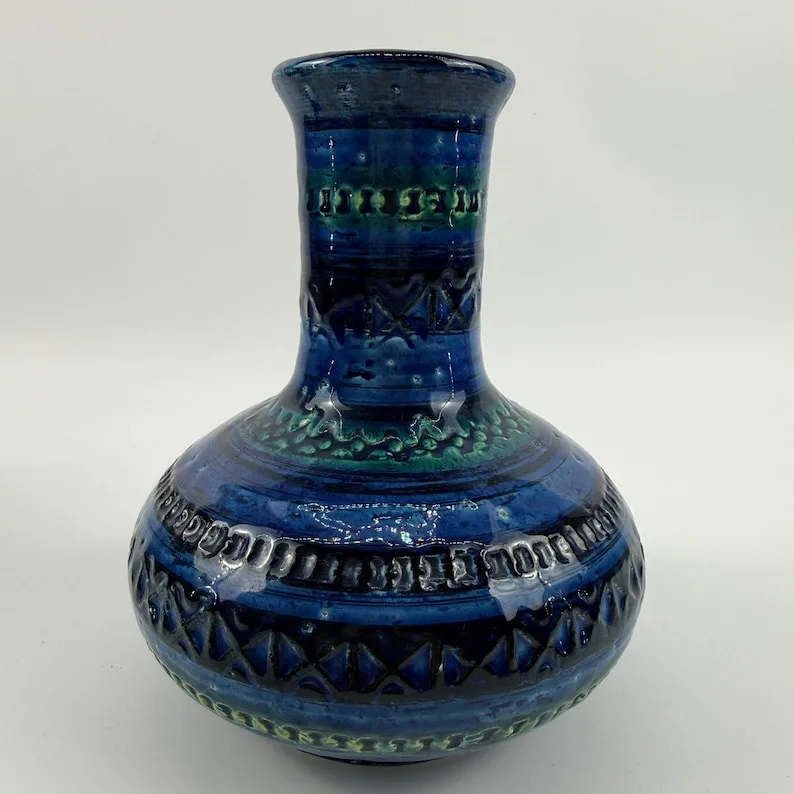
Rimini Blue Squat Onion Vase
Aldo Londi · 1960s
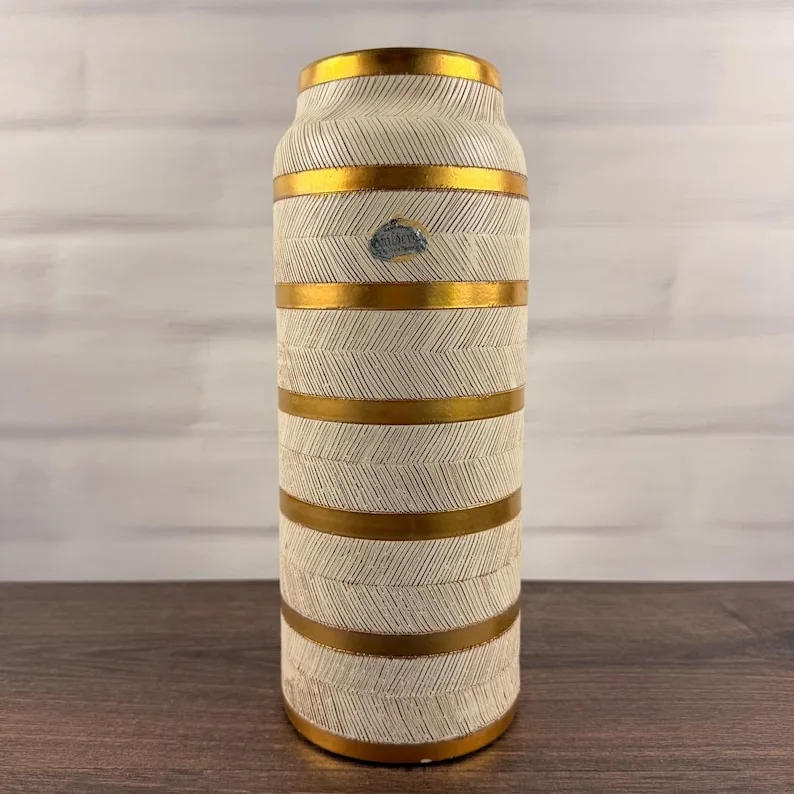
Seta Sgraffito Vase
Aldo Londi · Gold and turquoise
Piume Feather Pitcher
Aldo Londi · Multicolor
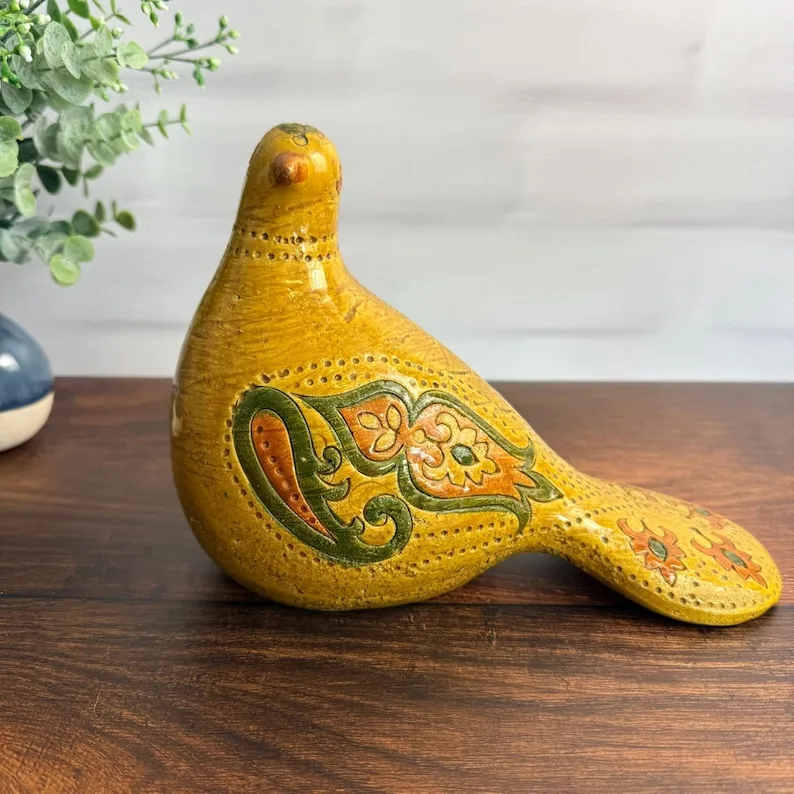
Liberty Yellow Bird Sculpture
Italian ceramic
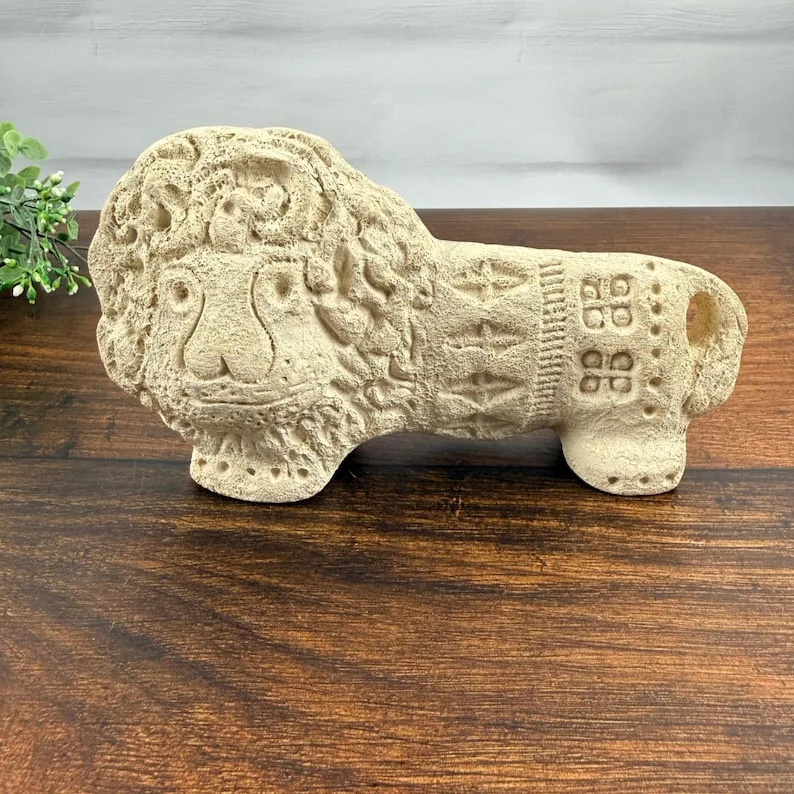
Flavia Unglazed Lion
Aldo Londi · Mid-century
Looking for a specific piece? Tell us what you're hunting for and we'll keep an eye out.
More artisans
Keep exploring

Glass · Milton, West Virginia, USA
Blenko Glass
Saturated turquoise, tangerine and amethyst from West Virginia. The maker we carry more than any other, from Winslow Anderson to Hank Adams.
Explore Blenko →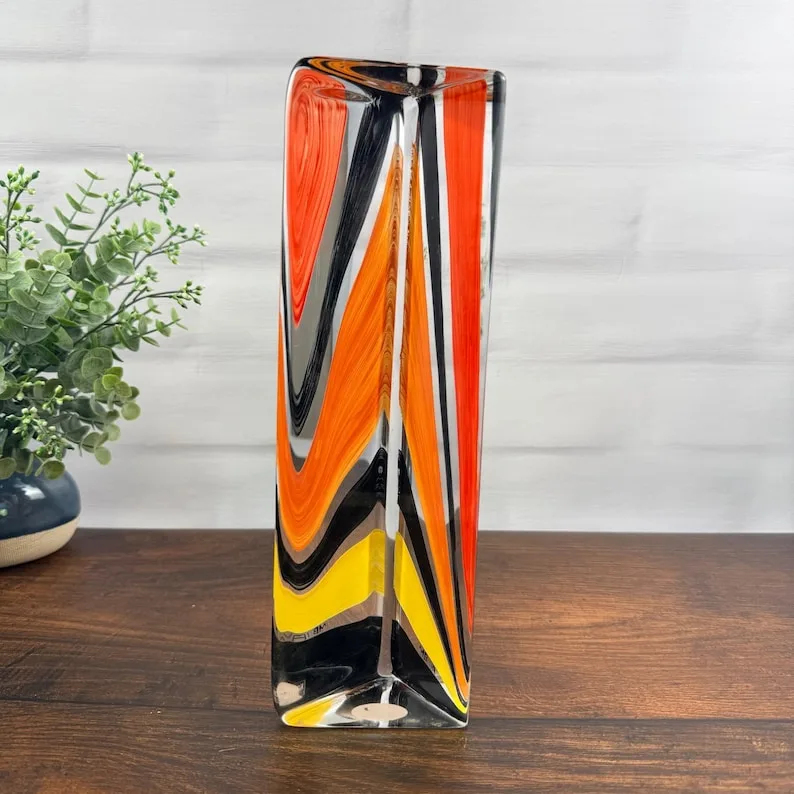
Glass · Småland, Sweden
Kosta Boda
Swedish studio glass from the "Kingdom of Crystal" — Bertil Vallien's sand-cast sculpture, Ulrica Hydman Vallien's painted faces and Kjell Engman's color.
Explore Kosta Boda →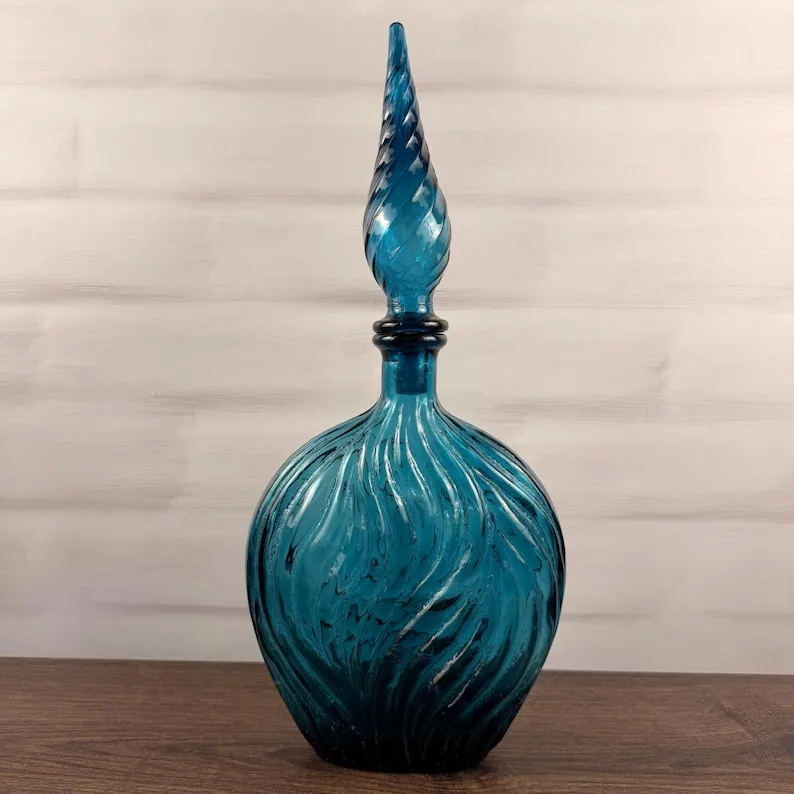
Glass · Empoli, Tuscany, Italy
Empoli Glass
Mid-century Tuscan glass in amber, olive, peacock blue and pink — genie bottles, circus-tent jars, apothecary urns and twisted-stem goblets.
Explore Empoli →