Artisans · Glass
Empoli Glass
Empoli, Tuscany, ItalySince 1830s
Tuscan glass: genie bottles, apothecary jars and colored optic glass.
A short history
Empoli, a town on the Arno between Florence and Pisa, has made glass for centuries. Its glassworks grew up producing the green wine flasks and demijohns that Tuscany's wineries needed, and the region's greenish "verde" glass became its trademark.
By the 1930s Empoli's factories were combining that green glass with decorative work, and after World War II colored glass took over. From the 1950s through the 1970s the town's glassworks turned out huge quantities of tableware and decorative pieces for the Italian market and for export, including to the United States. That's the "Empoli glass" collectors look for today.
Empoli and the surrounding area remain one of Italy's important glassmaking districts, and the town's glass museum, the Museo del Vetro, tells the story of the industry and the families who worked in it.
What to look for
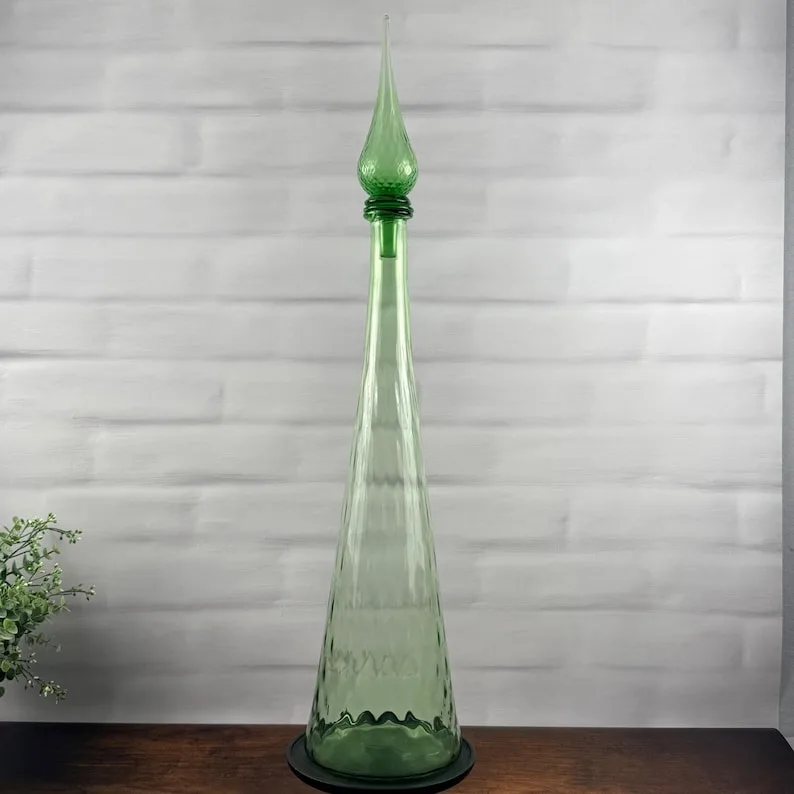
- Genie bottles and decanters — tall, tapering bottles with flame-shaped stoppers, sometimes over two feet high.
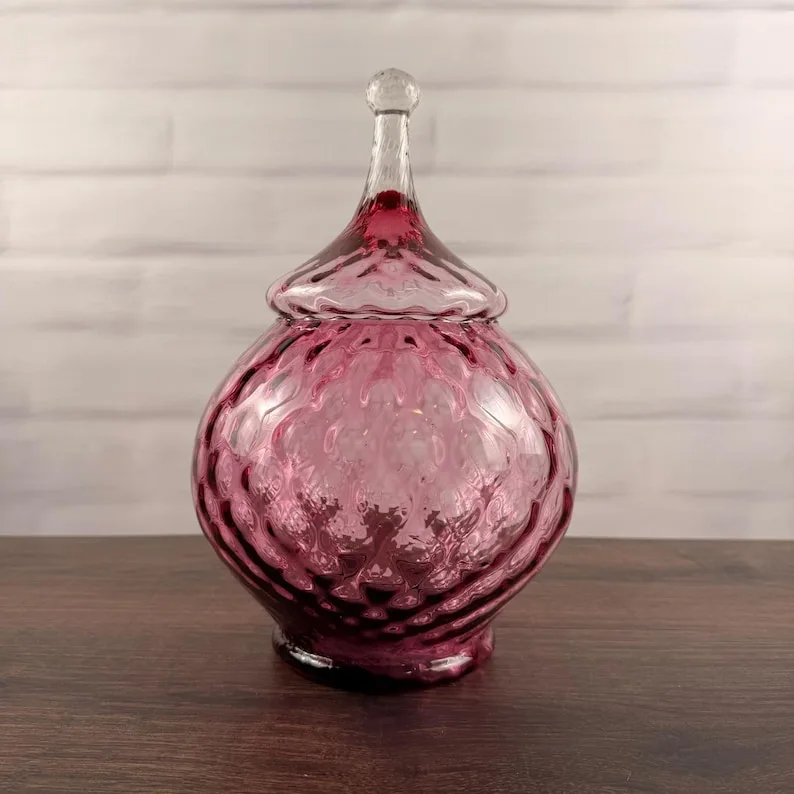
- Apothecary and "circus tent" jars — lidded jars with pointed or ribbed lids, often on a pedestal.
- Optic and swirl glass — molded ribs or spirals that catch the light, in amber, teal, olive and cranberry.
- Cased glass — a layer of color over white or clear, as in many of the pink goblets.
- Twisted and air-twist stems — goblets, compotes and candy dishes on spiral stems.
Identifying Empoli
- No factory name. Empoli glass came from many different glassworks, and pieces rarely carry a maker's mark. "Empoli" describes the town and style more than a single company.
- Labels. When anything survives, it's usually a foil "Made in Italy" or importer label.
- Color and weight. Rich, even color, thick walls and a ground or polished base are typical. The classic palette is amber, olive green, peacock blue and pink.
- "Empoli style." Similar glass was made elsewhere; we say "Empoli style" when we can't be confident about origin.
Further reading
- Empoli glass on Visit Tuscany — the region's glassmaking tradition
- Empoli Glass on Google Arts & Culture — history from the Empoli glass museum
In our shop now
Empoli Glass at Comac Collection
Green Genie Bottle, 26.5"
Flame stopper
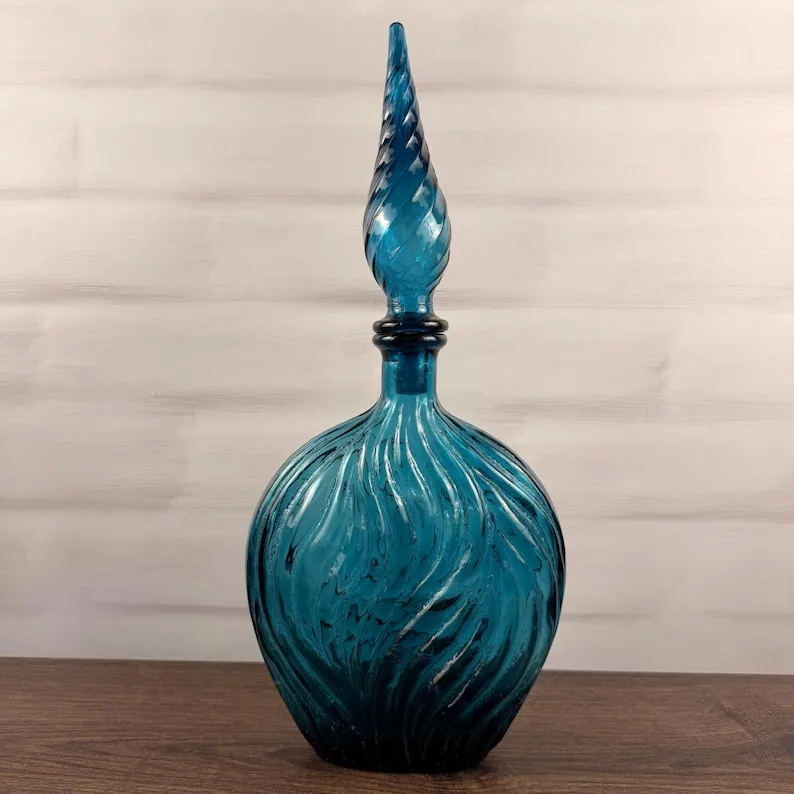
Teal Swirl Optic Decanter
Flame stopper · Mid-century
Pink Circus Tent Apothecary Jar
Optic glass

Peacock Blue Apothecary Jar
Mid-century
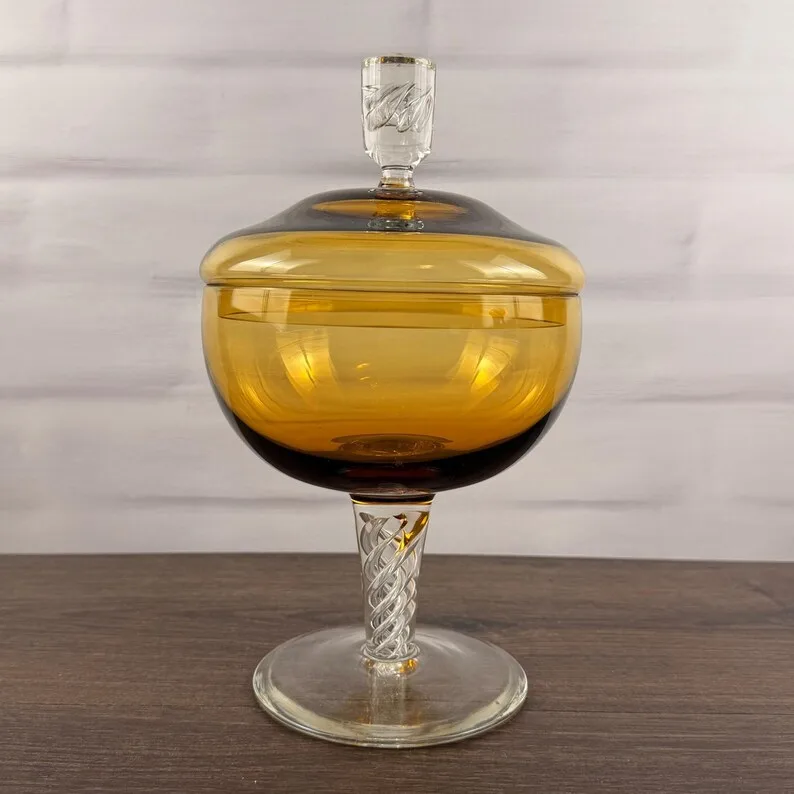
Amber Air-Twist Covered Compote
Twisted stem
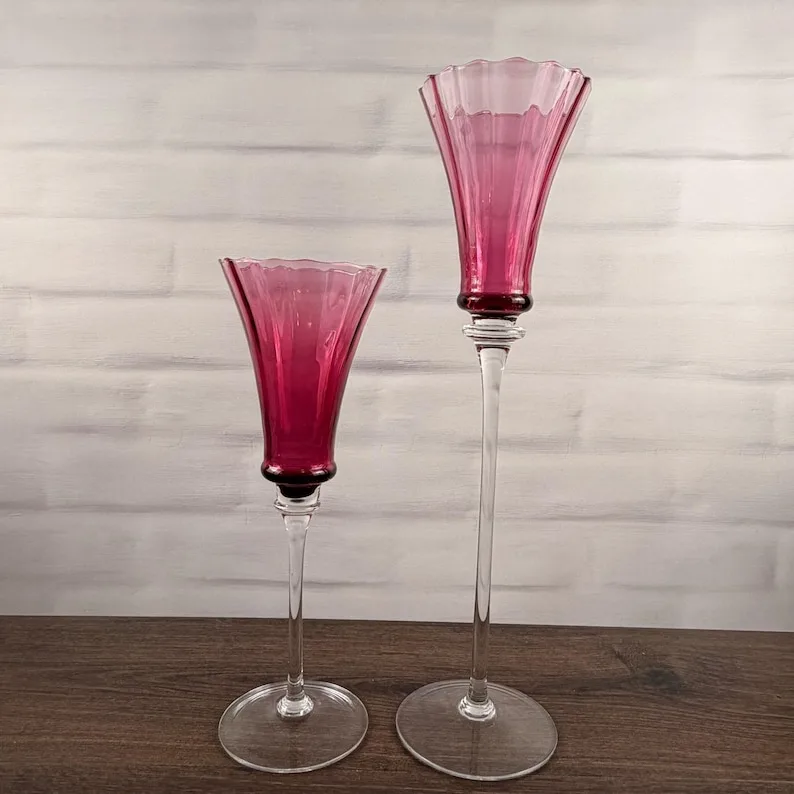
Pink Trumpet Vases
Clear stems · Pair
Looking for a specific piece? Tell us what you're hunting for and we'll keep an eye out.
More artisans
Keep exploring

Glass · Milton, West Virginia, USA
Blenko Glass
Saturated turquoise, tangerine and amethyst from West Virginia. The maker we carry more than any other, from Winslow Anderson to Hank Adams.
Explore Blenko →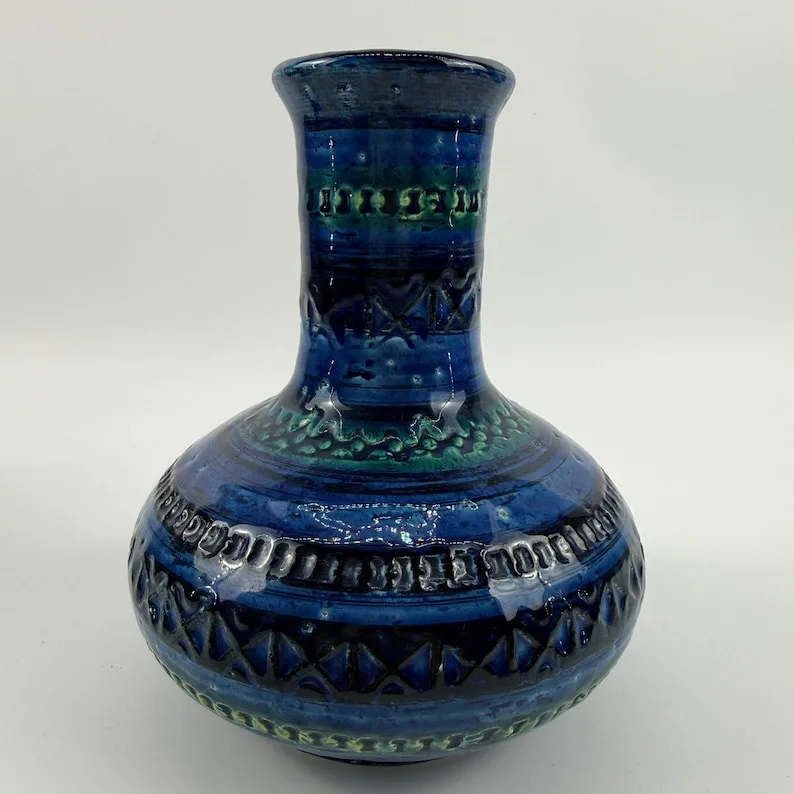
Ceramics · Montelupo Fiorentino, Tuscany, Italy
Bitossi
Tuscan art pottery from Montelupo — Aldo Londi's Rimini Blu, sgraffito Seta, the Liberty birds and the Flavia animals.
Explore Bitossi →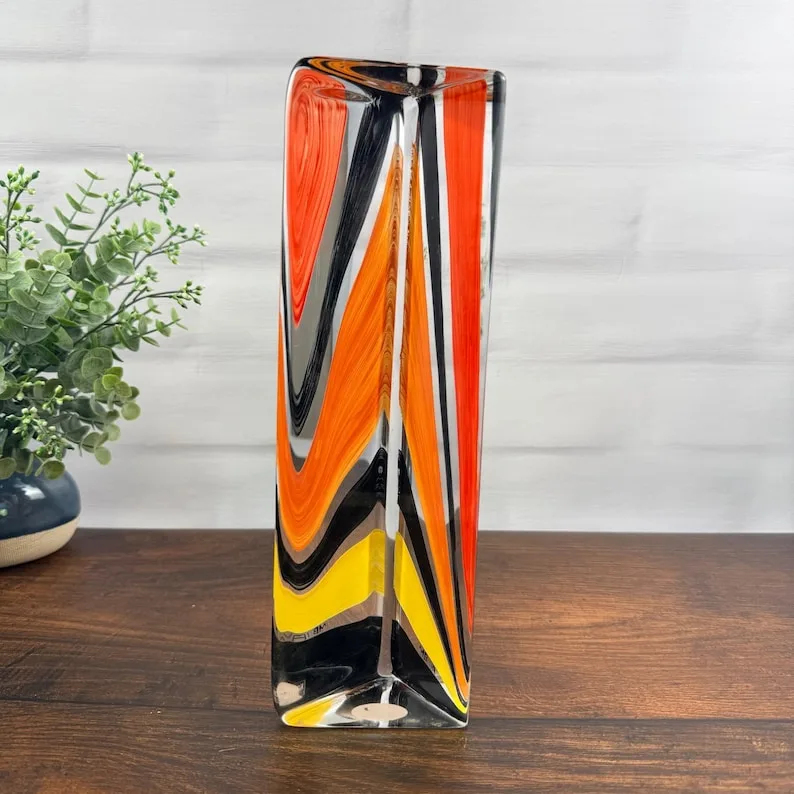
Glass · Småland, Sweden
Kosta Boda
Swedish studio glass from the "Kingdom of Crystal" — Bertil Vallien's sand-cast sculpture, Ulrica Hydman Vallien's painted faces and Kjell Engman's color.
Explore Kosta Boda →