Artisans · Glass
Blenko Glass
Milton, West Virginia, USASince 1922
Hand-blown American glass in saturated mid-century color.


A short history
William John Blenko, an English glassmaker who trained in London, came to the United States and made several attempts at a glass business — in Kokomo, Indiana; Point Marion, Pennsylvania; and Clarksburg, West Virginia — before founding the Eureka Art Glass Company in 1922. The business settled in Milton, West Virginia, and took the name Blenko Glass Company in 1930.
Blenko began as a maker of hand-blown flat glass for stained-glass windows. Its glass went into cathedrals and chapels including Liverpool Cathedral, Washington National Cathedral, St. Patrick's Cathedral in New York and the U.S. Air Force Academy Chapel.
When the Depression dried up demand for church windows, the company turned to hand-blown tableware and decorative glass in the early 1930s. In the late 1930s it won the contract to reproduce period glass for Colonial Williamsburg, and after the war a series of in-house design directors turned Blenko into one of the defining names in American mid-century design.
Blenko is still family-run and still blowing glass by hand in Milton, where its visitor center (opened 1966) sells current production and factory seconds and hosts a small museum.
The design directors
Collectors usually date and value Blenko by who was designing at the time. The broad eras:
- Winslow Anderson 1947–1953 Blenko's first full-time designer, ushering in the modern era.
- Wayne Husted 1953–1963 Big, architectural shapes and bold color — many of the most sought-after floor vases and pitchers.
- Joel Philip Myers 1963–early 1970s Sculptural, often asymmetric pieces in vivid color.
- John Nickerson 1972–1975
- Don Shepherd 1975–1988 The longest-serving designer of the era.
- Hank Murta Adams 1988–1994 Textured, painterly studio-glass influence.
- Matthew Carter 1994–2002
- Later designers 2000s–today Including Arlon Bayliss, Emma Walters, Andrew Shaffer and guest artists.
Identifying Blenko
- Labels and signatures. Most pieces left the factory with a paper or foil label, which is often long gone. Some pieces from certain years carry an etched or sandblasted signature; many genuine pieces have no mark at all.
- Model numbers. Blenko catalogued every design by number (the 609 vase, the 656 pitcher, the 7048 floor vase). A trailing letter often marks the size — S, M or L. Matching shape and color to a catalog page is the most reliable ID.
- Hand-blown character. Expect a ground or polished pontil, slight unevenness, and the occasional bubble or wave — signs of handwork, not flaws.
- Color. Blenko's palette changed by year; colors like turquoise, tangerine, olive green and amethyst help narrow an era.
- "Blenko style." Lots of mid-century glass resembles Blenko. We label lookalikes as "Blenko style" and only call a piece Blenko when we can match it.
Further reading
- Blenko Glass Company — the official site, current production and visitor center
- Blenko Glass Company on Wikipedia — company history
- Glassmaking at Blenko — techniques and production
In our shop now
Blenko Glass at Comac Collection

Blenko 7048 Turquoise Floor Vase
1970s
Blenko 544 Pitcher by Wayne Husted
Turquoise

Blenko 609 Vase by Wayne Husted
Turquoise · 1960
Blenko 656M Pitcher by Joel Myers
Tangerine · 1965
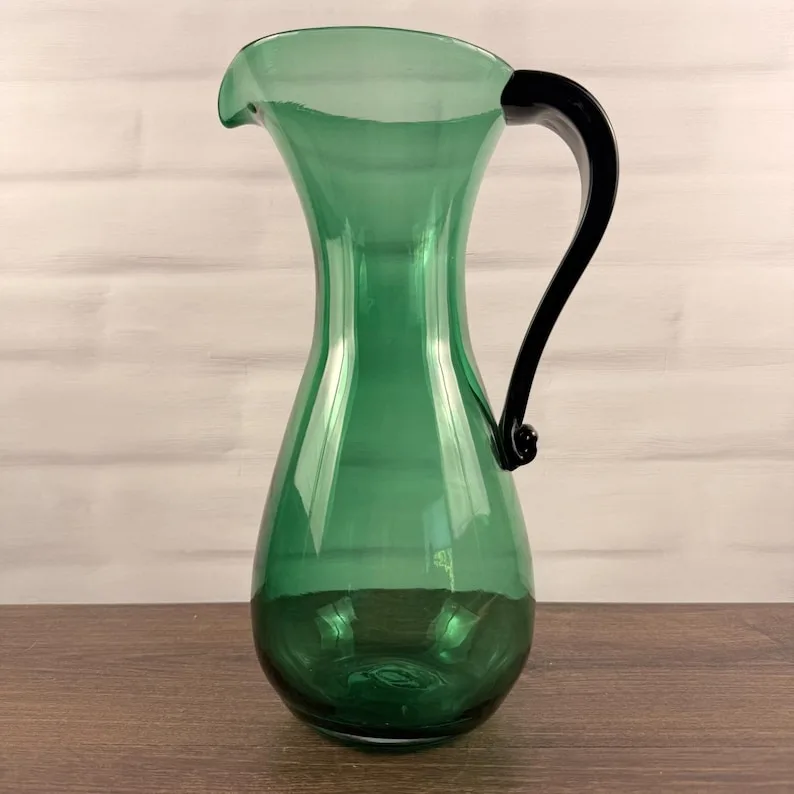
Blenko 569P Pitcher by Wayne Husted
Nile green
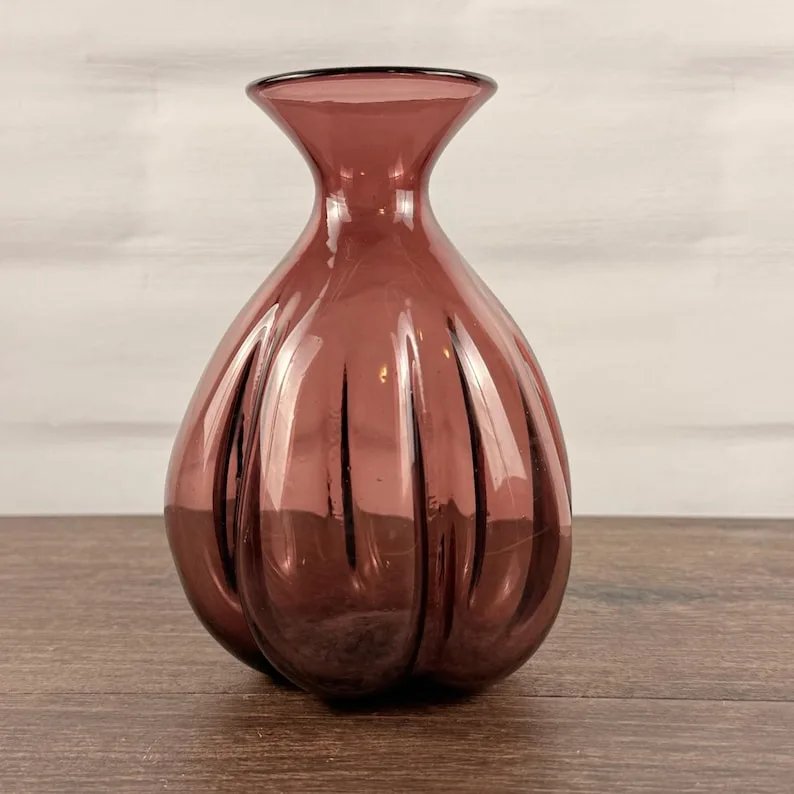
Blenko 928 Melon Bud Vase
Winslow Anderson · Amethyst
Looking for a specific piece? Tell us what you're hunting for and we'll keep an eye out.
More artisans
Keep exploring
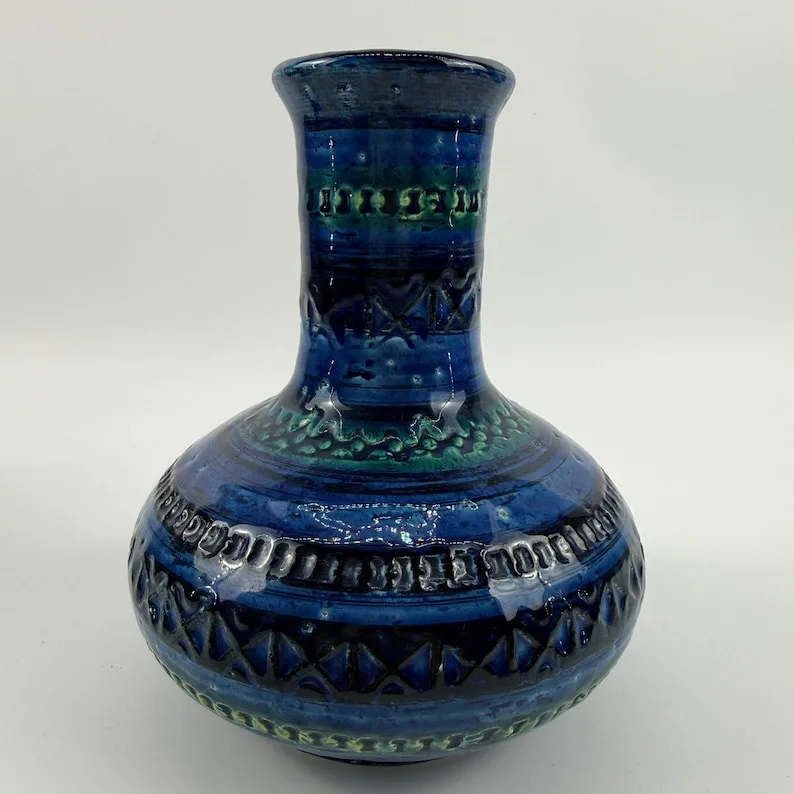
Ceramics · Montelupo Fiorentino, Tuscany, Italy
Bitossi
Tuscan art pottery from Montelupo — Aldo Londi's Rimini Blu, sgraffito Seta, the Liberty birds and the Flavia animals.
Explore Bitossi →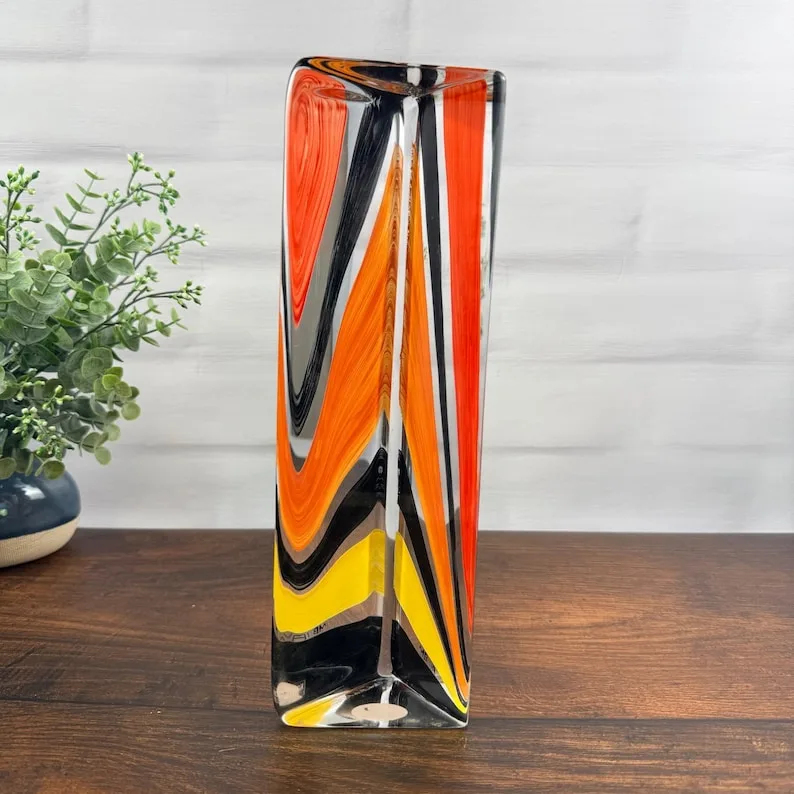
Glass · Småland, Sweden
Kosta Boda
Swedish studio glass from the "Kingdom of Crystal" — Bertil Vallien's sand-cast sculpture, Ulrica Hydman Vallien's painted faces and Kjell Engman's color.
Explore Kosta Boda →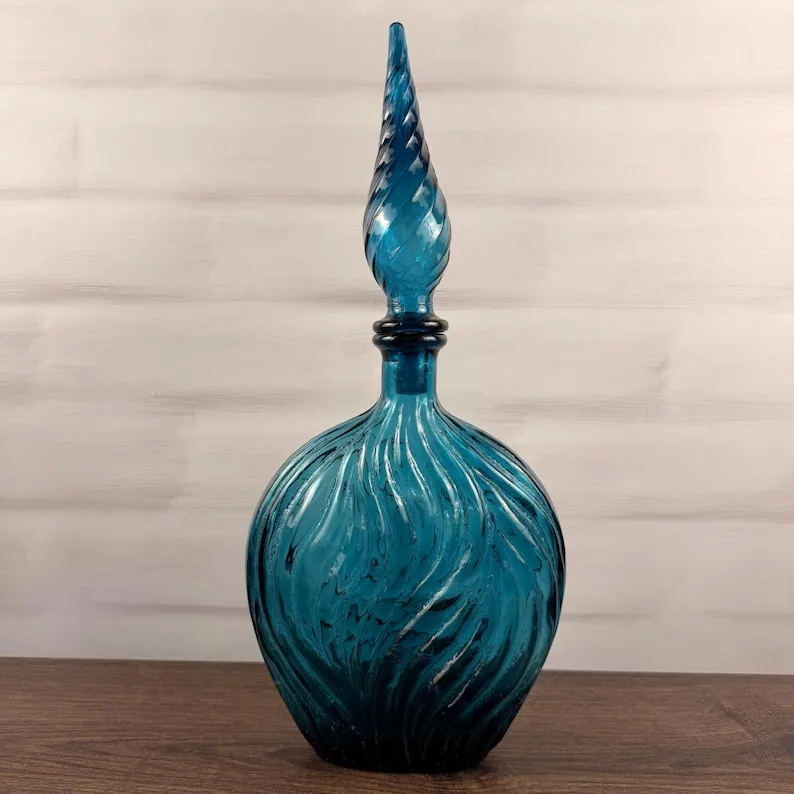
Glass · Empoli, Tuscany, Italy
Empoli Glass
Mid-century Tuscan glass in amber, olive, peacock blue and pink — genie bottles, circus-tent jars, apothecary urns and twisted-stem goblets.
Explore Empoli →